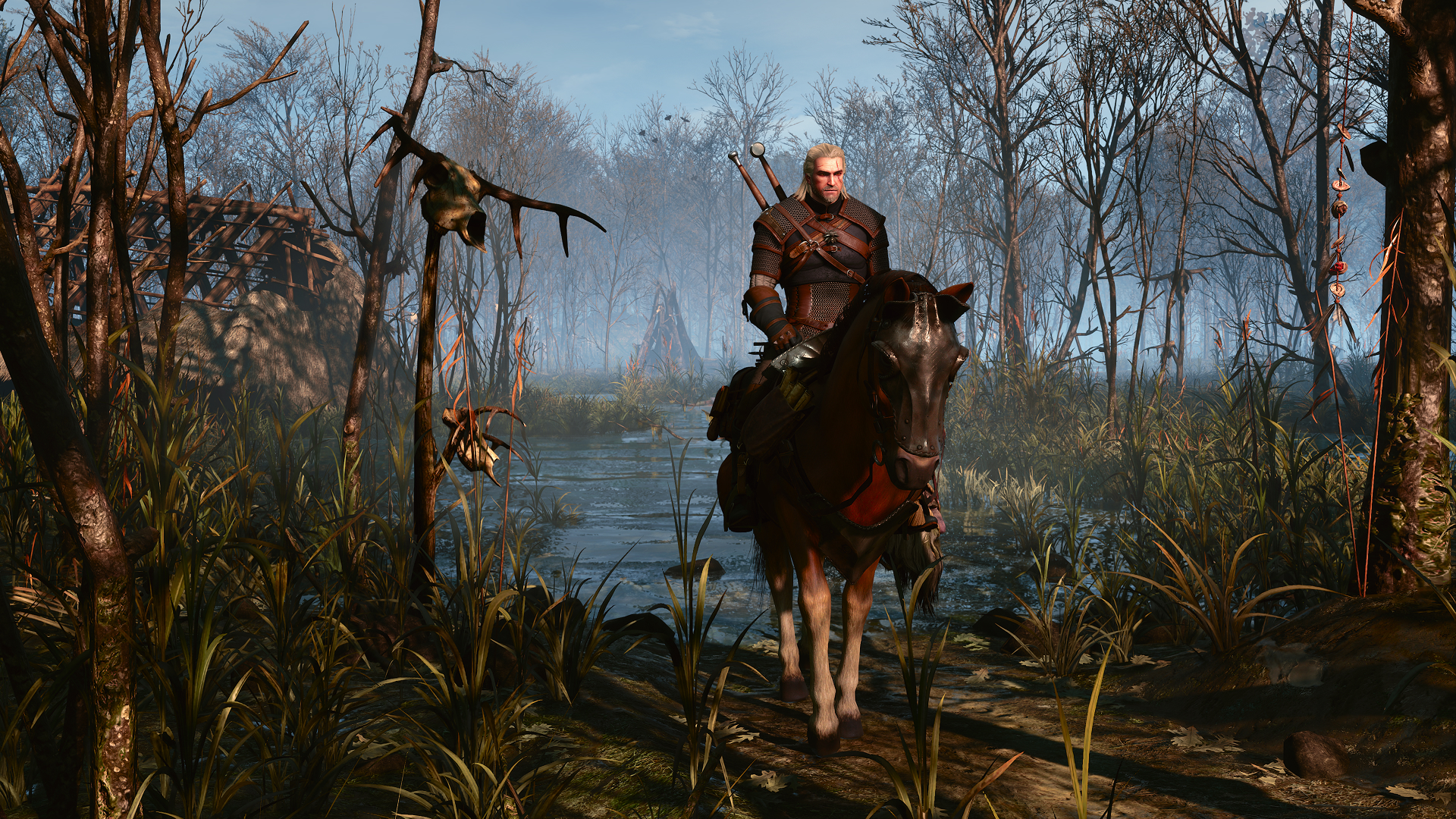
The Witcher 3 Remastered System Requirements: PC Hardware Guide
Check the updated The Witcher 3 remastered system requirements. Discover if your PC hardware can handle the new graphics, path tracing, and gameplay updates.
Updated: The Witcher 3 Wiki Editorial Team
Table of Contents
The continent is calling once again following the September 29, 2026 remastered release. Understanding the updated The Witcher 3 remastered system requirements helps you choose suitable hardware and settings as you step back into the boots of Geralt of Rivia.
Whether you are a veteran of the series or a newcomer preparing for your first hunt, hardware optimization is the key to enjoying the enhanced lighting, textures, and quality-of-life improvements. This guide breaks down exactly what you need to run the game, how to optimize your settings, and why these changes matter for your overall gameplay performance.
Understanding the Hardware Shift
The jump to a modernized version of this classic RPG brings significant technical demands. Unlike the original 2015 release, the remastered version leverages advanced rendering techniques like path tracing and global illumination. These features are visually stunning but require more robust hardware to maintain stable frame rates.
The most critical change is the shift to DirectX 12 and the requirement for SSD storage. According to official CD PROJEKT RED technical support, the removal of HDD support is intentional; an SSD is now mandatory for faster asset streaming, which prevents pop-in and stuttering in the game’s dense open-world environments.
Updated Minimum vs. Recommended Specifications
To help you gauge your current setup, the table summarizes the collected requirement data. The official support notes report 60 FPS or more with a GTX 1660 at the Minimum preset under their test conditions. Actual performance varies with the scene, settings and resolution; these figures are not a guarantee for every PC.
Component
Minimum Requirements
Recommended Requirements
OS
Windows 11
Windows 11
CPU
Ryzen 5 2600 / i5-8400
Ryzen 5 3600X / i7-8700K
GPU
GTX 1660 / RX 5500 XT / Arc A580
RTX 2060 Super / RX 6600 XT / Arc B580
RAM
12 GB
16 GB
Storage
70 GB SSD
70 GB SSD
Why These Upgrades Matter
You might wonder why The Witcher 3 requires such a significant jump in hardware compared to its original release. The answer lies in the engine’s modernization. The developers have integrated community-sourced mods, improved foliage shaders, and reworked environmental geometry. These enhancements create a more reactive world, but they also increase the overhead on your CPU and GPU.
Tip
Optimize for Performance
If you are struggling to hit your target frame rate, prioritize lowering "Shadow Quality" and "Foliage Visibility" before touching resolution settings. These two settings often provide the biggest performance gains with the least impact on visual fidelity.
Furthermore, the implementation of NVIDIA’s Ray Reconstruction and AMD’s FSR 4.0 allows for cleaner visuals at lower resolutions. If your hardware is on the lower end of the spectrum, enabling these upscaling technologies is the single most effective way to improve fluidity without sacrificing image clarity.
Preparing Your PC for Path Tracing
For those looking to experience the game at its peak, Path Tracing is the "holy grail" of this remaster. However, it is exceptionally demanding. While the recommended specs cover standard high-quality play, enabling full path tracing requires a significant leap in power.
Recommended Hardware for Path Tracing
GPU and VRAM: Consult the official requirement chart for your intended path-tracing preset rather than treating the standard Recommended column as a path-tracing target.
Test conditions: Published path-tracing measurements use upscaling and Frame Generation. This describes the benchmark setup, not a universal requirement to enable those options on every supported GPU.
Settings: Match the chart's resolution and preset before comparing your own frame rate.
Community reports suggest that even with top-tier hardware, path tracing can cause frame rate fluctuations in heavy areas like Novigrad. Using "Balanced" or "Performance" upscaling modes is highly recommended for a consistent experience. You can find detailed technical documentation on the Official CD PROJEKT RED Support Page.
Quality of Life and Gameplay Changes
Beyond the visual requirements, the remaster introduces deep gameplay changes that affect how you interact with the world. Players will notice a revamped inventory system, improved mount handling, and a modernized skill tree. These changes are designed to streamline the experience, making the "Path" feel more intuitive than ever before.
Feature
Improvement
Combat
Enhanced sign casting and smoother animations
Inventory
Better UI navigation and weight limit options
Exploration
Revamped mount handling and pathfinding
Accessibility
New options for tailoring difficulty and UI
Troubleshooting Common Issues
If you find that your game is crashing or performing poorly, check these common pitfalls identified by the community:
Driver Compatibility: Ensure your GPU drivers are updated to the latest version. Older drivers from the Maxwell or Pascal era may struggle with the new DX12 implementation.
Background Processes: High-end graphical settings often compete with background tasks for CPU cycles. Close browser tabs and recording software while playing.
SSD Bottlenecks: Keep enough free space for installation, updates and normal system operation. The official requirements do not specify a universal 15% free-space threshold.
Warning
Avoid HDD Installations
Installing this version on a mechanical hard drive will lead to significant texture pop-in and long loading times. We strongly advise moving your installation to an NVMe or SATA SSD.
FAQ: Frequently Asked Questions
Q: Does The Witcher 3 remastered version include all previous DLCs?
A: Yes, the release includes both the Hearts of Stone and Blood and Wine expansions for free for existing owners of the base game.
Q: Can I still play the original version if my PC doesn't meet the new requirements?
A: Yes, CD PROJEKT RED has confirmed that players can revert to the "Classic" version (1.32) or the previous 4.04 version via the game's properties menu on Steam.
Q: Does the game support handheld devices like the Steam Deck?
A: Do not assume that meeting an older version's requirements confirms Remastered performance on Steam Deck. Check the current compatibility status and settings for the version you intend to play; Classic and 4.04 have separate requirements.
Q: Is a fresh install recommended?
A: Given the massive overhaul of textures and lighting, a clean installation is highly recommended to avoid conflicts with leftover mod files from previous playthroughs.